
Your Numbers Don’t Add Up – Here’s Why
You ran your loan details through a loan amortization schedule calculator and the result looks nothing like what your lender gave you. Or the total interest is shocking and you’re not sure the tool is even correct.
Most people try a second calculator and get a different answer. That makes things worse.
The problem usually isn’t the calculator. It’s what you’re putting into it – and what you’re leaving out. Things like compounding frequency, extra payments, and how interest is applied each month can all quietly shift your numbers.
This article explains exactly how a loan amortization schedule works, why your results might be off, and how to get numbers you can actually trust. No finance degree needed. Just accurate answers.
Quick Answer
A loan amortization schedule calculator shows how each payment splits between principal and interest across the full life of your loan. Numbers differ from your lender’s when compounding frequency or fees aren’t accounted for. Fix it by matching your inputs – loan amount, rate, term, and payment frequency – exactly to your loan documents.
How a Loan Amortization Schedule Calculator Actually Works
Why It Occurs
The majority of folks become perplexed since they are unaware of the true purpose of the tool. It’s not an estimate. For the duration of the loan, it runs a particular formula for each and every payment cycle.
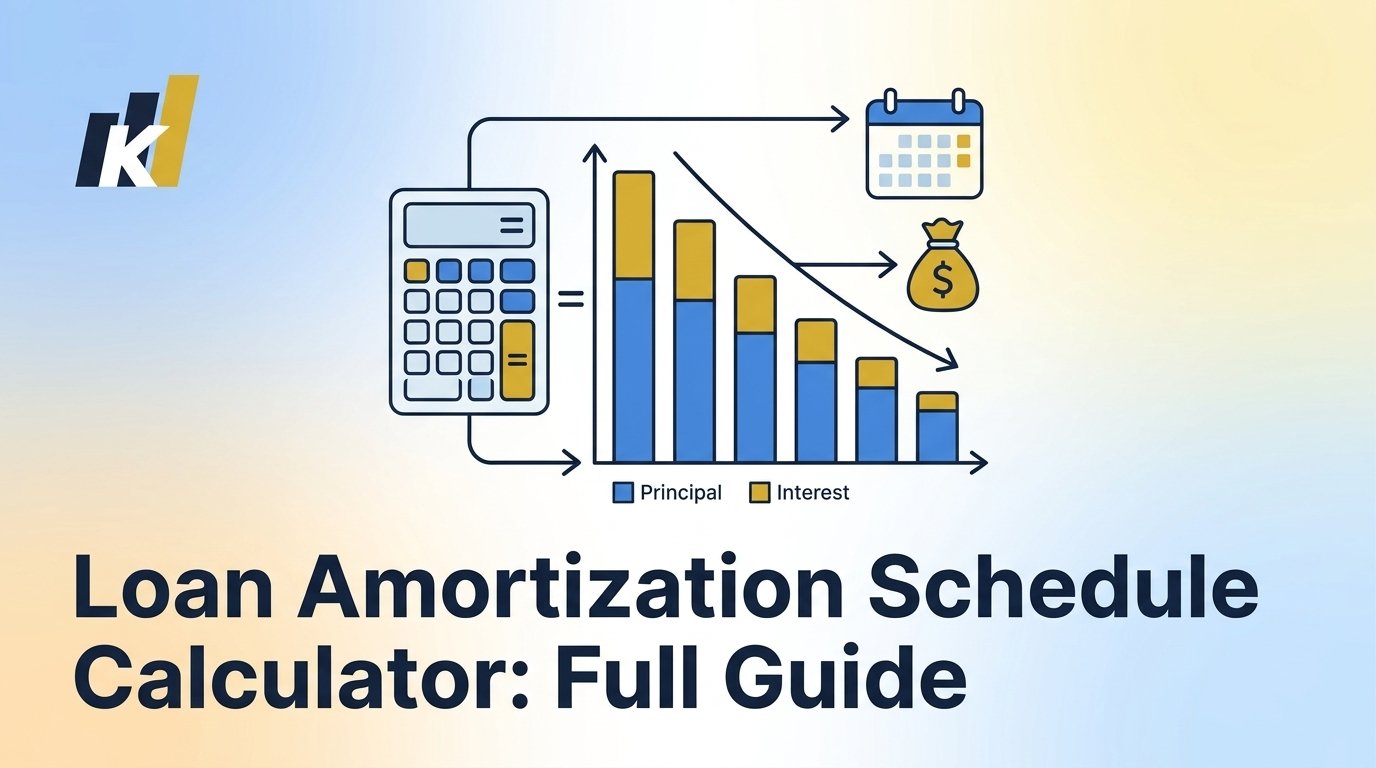
A portion of each payment is used to pay interest and a portion is used to lower your principle. The interest portion of the loan is substantial early on. Over time, it gets smaller. Amortization refers to that change.
The Solution
This is how each monthly computation operates:
- Take the amount you currently owe on your loan.
- Multiply it by the interest rate you pay each month. (Divide the annual rate by twelve.)
- That provides you with the monthly interest charge.
- Deduct it from the amount you have set aside for payments.
- What’s left makes you less balanced.
Continue doing this each month until the balance is zero.
A solid payment calculator with interest does all of this automatically. You just need the right inputs: loan amount, interest rate, loan term, and start date.
Result
Once you understand this, every row in your amortization schedule makes sense. You’re not looking at a confusing table anymore. You’re watching your debt shrink, month by month.
Common Mistakes:
- Using the full annual rate instead of dividing by 12 first.
- Assuming every calculator handles compounding the same way.

Why Your Numbers Don’t Match Your Lender’s
Why It Happens
This is the most common frustration. You enter your details into a loan amortization schedule calculator and the totals don’t line up. The interest looks different. The payment amounts are slightly off.
It’s usually not a broken tool. Here’s what’s actually happening:
- Lenders sometimes compound interest differently (daily vs. monthly).
- Fees, insurance, or taxes may be rolled into your lender’s payment figure but not the calculator’s.
- A partial first payment period – the gap between your closing date and first payment – can throw off the entire schedule.
The Fix
- Pull out your original loan documents. Find the stated note rate, not just the APR.
- Check how your lender compounds interest. Most mortgages use monthly compounding. Some personal loans use daily.
- Set the compounding option in your calculator to match.
- Enter the loan amount before fees are added.
- If your calculator allows it, set a custom first payment date to account for the partial period.
Result
Your totals will align much more closely with your lender’s figures. And you’ll know exactly where the gap came from – a setting you overlooked, not a math error.
How Mortgage Amortization With Extra Payments Changes Everything
Why It Occurs
People feel stuck after 30 years of interest. It’s a big number. They so pose the obvious query, “What if I paid a little bit more each month?”
The solution is mortgage amortization with additional payments. Any additional money you add to your regular payment is immediately applied to principal. Less interest will be assessed the next month if the principal is lower. Over time, that influence gradually intensifies.
The Solution
Look for a field labeled “extra payment” or “additional principal” in a reliable loan amortization schedule calculator. How to utilize it is as follows:
- First, enter the details of your normal loan.
- In the extra payment section, enter the additional sum you intend to add each month.
- Let the calculator use the updated numbers to recreate your entire schedule.
- Examine the new total interest amount and the new payback date.
On a typical 30-year mortgage, even an additional $100 a month can shorten the loan’s term and save a significant amount of interest.
The outcome
Both the overall interest expense and the payment date will be shortened. People frequently underestimate the difference.
[Related post: Amortization Calculator: Fix Your Loan Math Fast]
Common Mistakes:
- Assuming extra payments automatically reduce principal – confirm this with your lender first.
How to Read an Amortization Chart Calculator the Right Way
Why It Happens
An amortization chart calculator gives you more than just a payment figure. It shows a visual breakdown of every payment across your loan. But most people glance at the monthly amount and stop there.
They miss the most useful information on the page.
The Fix
Here’s what to actually look at when you open your amortization chart:
- Check the interest-to-principal ratio in the early months. On a long-term mortgage, the first years of payments are heavily weighted toward interest.
- Find the crossover point – the specific month where your principal payment finally exceeds your interest payment. That’s a real milestone.
- Look at the cumulative interest column. It shows how much total interest you’ve paid up to any point in the loan.
- Test scenarios: what if you refinanced after five years? What if you added extra payments in years three through seven? Run each version and compare.
Result
The chart stops being a confusing spreadsheet and becomes a real decision-making tool. You can see exactly which years cost you the most – and where changes have the biggest impact.

Getting Accurate Results From a Principal and Interest Calculator for Mortgages
Why It Happens
A principal and interest calculator mortgage result is only as accurate as what you put into it. The tool isn’t the issue. Small input mistakes that most people don’t notice are.
A misread interest rate, a wrong loan term, or an off-by-one-month start date can shift your totals noticeably over a long loan.
The Fix
Before you calculate anything, confirm these five inputs from your actual loan documents:
- Loan amount – the amount borrowed, not including your down payment.
- Note rate – the stated interest rate on your contract, not the APR.
- Loan term – in months or years, exactly as written.
- Payment frequency – monthly is standard for most mortgages.
- First payment date – some calculators account for the gap between closing and your first payment.
Once all five are accurate, your schedule will closely match your lender’s.
Result
Accurate inputs give you a schedule you can actually use – whether you’re planning early payoff, comparing loan offers, or understanding where your money goes each month.
Pro Tip: When comparing two loan offers, run a full amortization schedule for each and compare total interest paid over the full term. A lower monthly payment doesn’t always mean a lower total cost.
FAQ
What is a loan amortization schedule?
A loan amortization schedule is a complete table of every payment you’ll make over the life of your loan. Each row covers one payment period and shows how much goes to interest and how much reduces your principal. By the final row, your remaining balance should be exactly zero.
How does a loan amortization schedule calculator work?
It takes your loan amount, interest rate, and term, then runs a calculation for each payment period. Each month, it calculates your interest charge based on the current balance, subtracts that from your payment, and applies the remainder to principal. This repeats until the balance hits zero.
Why is my amortization schedule different from my lender’s?
The most common reasons are a mismatch in compounding frequency (daily vs. monthly), fees included in your lender’s payment that aren’t in the calculator, or a partial first-period adjustment. Check your loan contract for the exact compounding method, enter it correctly, and the numbers will line up much closer.
How do extra payments affect my loan amortization schedule?
Extra payments go straight to principal, which lowers the balance your next interest charge is calculated from. That creates a compounding benefit over time. Even modest extra monthly payments can cut years off your loan and reduce the total interest you pay across the full term significantly.
What’s the difference between APR and the interest rate in an amortization calculator?
Your interest rate is what determines each month’s interest charge and your monthly payment. The APR is a broader measure that includes fees and reflects the true annual cost of borrowing. When running an amortization calculation, use the stated note rate from your loan documents, not the APR.
How do I use an amortization chart calculator to compare two loans?
Run a full schedule for each loan separately using the same loan amount and term. Then compare the total interest paid across the full term, not the monthly payment alone. A loan with lower monthly payments can still cost more overall. The total interest column tells you the real story.
You Can Figure This Out – Here’s What to Do Next
The numbers aren’t the enemy. Unclear inputs are. A loan amortization schedule calculator is one of the most useful financial tools you have access to, but it only works when you feed it accurate data.
Two things matter most: match your compounding frequency to your lender’s method, and always use your note rate, not the APR. If you have a mortgage, run one calculation with an extra $50 or $100 per month added and look at what changes. The difference in total interest is usually worth seeing.
Start with any reputable loan amortization schedule calculator – many are free online. Enter your actual loan details from your documents. Then look at the total interest column, not just the monthly payment. That number tells you what the loan actually costs you.
You have the information now. Put it to use.